A good Linux user takes notes all the time. A better Linux user organizes them in a proper knowledge base.
From Obsidian to Tolaria, there are plenty of choices. You could explore some self-hosted knowledge base tools that may even help your team.
If your knowledge base grows bigger, you can plugin an AI and get answers from your personal notes.
Lately, we have been exploring AI... local AI mostly with open source models running on your machine and keeping the data private on your system.
For example, take this AI powered file sorter app. To a seasoned sysadmin, this could be a shell script but it could still fit someone's need I think.
Then there is agent based automation. So we took ZeroClaw and plugged it with Fizzy CLI to manage Kanban task board. Interesting times we live in.
I still find it amsuing that many new age developers are not familiar with even the basics of Linux command line. Our intro course is free so feel free to use it and share it with others.
 Ted LeRoy
And for advanced Linux users, the systemd Playbook is a good way to make more out of systemd.
 Bhuwan Mishra
💡Quick terminal tip
Ever need to document a complex deployment, or share the exact errors a script threw with a teammate? Instead of manually copying and pasting from your terminal, you can record the entire session, both the commands you typed and their visual outputs to a single text file.
Launch a dedicated logging session using the built-in script command:
script sample.txt -T sample_time
Here, the sample_time file saves the timing information, needed to replay the content later.
From this moment on, your terminal behaves normally, but every keystroke, command, and output is quietly recorded in the background.
When your task is finished, simply exit the recording session:
exitNow you have a perfect, chronologically ordered transcript (sample.txt) ready for documentation or debugging.
To replay the commands, use:
scriptreplay -B sample.txt -T sample_time

🛠️ Tool discovery
Let's find your next favorite software in this section.
WTF: Build a Personal DevOps Dashboard Inside Your Terminal
WTF (wtfutil) is an open-source terminal dashboard that aggregates operational data, development workflows, and personal productivity information into a single TUI interface. Instead of constantly switching between GitHub, Jira, Kubernetes dashboards, calendars, monitoring tools, and terminal windows, WTF presents everything through configurable modules arranged in a customizable grid layout.
 wtfutil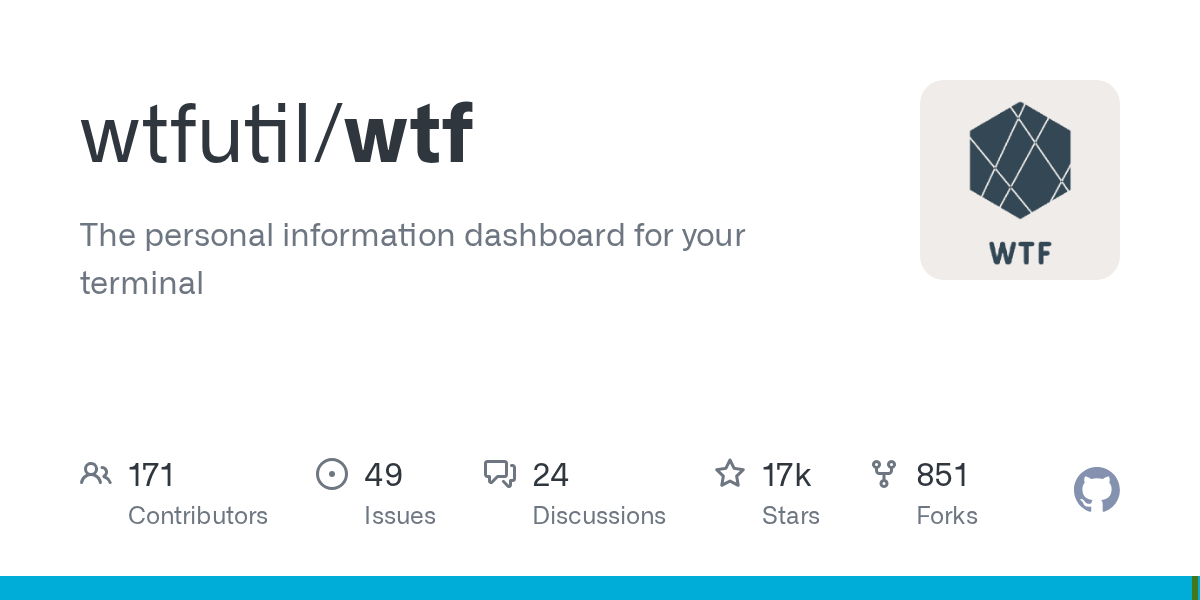
GoAccess: Real-Time Web Log Analytics Without Tracking Scripts
GoAccess is an open-source web log analyzer that provides real-time traffic analytics directly from web server logs. Unlike Google Analytics and similar services, it requires no JavaScript trackers, cookies, databases, or external services, making it a privacy-friendly choice for self-hosted environments. It runs in the terminal or generates live HTML dashboards, allowing administrators to monitor traffic, bandwidth usage, response times, errors, and suspicious activity directly from Apache, Nginx, Caddy, CloudFront, and other log sources.
 allinurl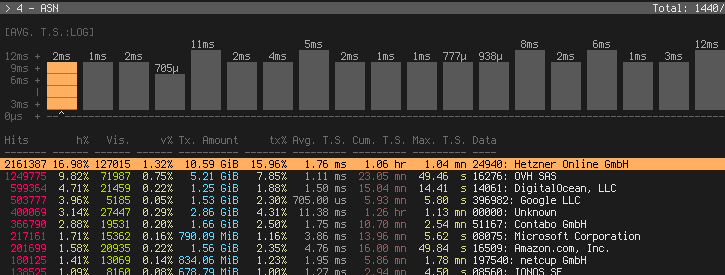
📰 Linux news that matters
- Podman 6.0 is here with some breaking and some interesting features. In cleaning, cgroups v1, iptables, CNI networking, slirp4netns, Intel Mac, and Windows 10 support are all dropped. BoltDB is gone and Podman auto-migrates to SQLite. Network isolation now defaults to enabled. New additions: AMD GPU support via
--gpus, apodman machine os updatecommand, and a patch for CVE-2026-57231 (host env var leakage via malformed image metadata) - Microsoft's long-planned Secure Boot certificate rollover has reached its final stage as legacy certificates issued in 2011 begin expiring in June 2026, requiring systems to transition to newer 2023 certificate chains. The change is intended to maintain UEFI trust integrity and enable future security updates that protect against firmware attacks, bootkits, and supply-chain compromises.
- The Linux Foundation announced its intent to launch the Agent Name Service (ANS), an open standard that extends DNS to provide identity, verification, and discovery mechanisms for AI agents operating across organizations and platforms. ANS aims to create a federated trust layer that allows operators to verify who an agent represents, what permissions it has, and whether its software remains authentic, without relying on proprietary registries or centralized control.
- Linux 7.2 removes the final uses of the strncpy() function from the kernel after roughly six years of work and more than 360 patches spread across numerous subsystems. The API has long been discouraged because its semantics frequently lead to truncation bugs, non-terminated strings, and other memory-handling mistakes, prompting kernel developers to replace it with safer alternatives.
- AWS has released AWS Blocks in public preview, an open-source TypeScript framework that packages application code, local development environments, and AWS infrastructure definitions into reusable modules called "Blocks." The framework provides local Postgres, authentication, messaging, storage, and other backend services without requiring an AWS account, while generating production AWS infrastructure automatically during deployment.
- Vercel has released eve, an open-source framework that defines AI agents as directories containing Markdown instructions, skills, and TypeScript tools, allowing agents to be developed using a filesystem-first workflow. The framework ships with production-oriented capabilities such as durable execution, sandboxed compute, subagents, approvals, and workflow orchestration already integrated rather than requiring developers to assemble multiple infrastructure components.
- GitHub has started retiring GitHub Models, the free AI playground and API layer introduced in 2024, with new customers already blocked from accessing the service as of June 16, 2026. Existing users can continue using the playground, APIs, and hosted models for now, but GitHub has confirmed that the service is heading toward full retirement and is directing new projects toward Azure AI Foundry.
😂 Geek humor
💌 Keep on loving Linux Handbook
We are working on a few new courses. GitOps is the next in publishing queue followed by GNS3.
And if you like the LHB Linux digest, you can encourage others to subscribe to this newsletter. (From here)
Become a Pro member and enjoy unlimited access to our eBooks, courses and in-depth tutorials.
Missed the previous editions? You can access the newsletter archives.
You may also contribute to Linux Handbook and share your experience and expertise with the community.
I like reading your messages, so just hit the reply button and share your thoughts 😄