We have just published a new course: AI Automation with n8n. n8n is hugely popular among developers and sysadmins for automating various workflows.
The tool itself is quite versatile. But if you are new to it, things could get overwhelming. That's why we created this for beginners.
It's a small course with 4 chapters. Available for free except chapter 4 which is available for members only.
 Yash Kiran Patil

Gradually, I will share more n8n example workflows. You can take inspiration from them and perhaps implement them in your workflows. Stay tuned for it.
Oh! By the way, there are so many Black Friday sale offers for Linux users. There are a few in learning as well. Like LabEx for hands-on beginner friendly labs.
And if you are into Kubernetes, KodeKloud is offering 50% off on its subscription.
 Abhishek Prakash

🧹 Clean up after the update
Updates leave things behind. Old kernels stay in /boot, every docker pull leaves the previous image on disk, and logs keep growing. Don't do regular clean up, your server runs out of space and then it goes down.
Start by finding where the space went. df -h shows how full each disk is, and du sorted by size lists the biggest folders and files, so you know what to clean first.
Logs are often the culprit. You can limit journal logs by size or by age with journalctl vacuum. For example, sudo journalctl --vacuum-time=2weeks keeps only the last two weeks.
On Ubuntu and Debian, sudo apt autoremove removes old kernels and dependencies you no longer need. Trust me, it frees up a decent amount of space.
🐳 Docker takes more space than you think
To see how much space Docker is using, run docker system df. This guide explains how to read the output for images, containers, volumes and build cache.
For a bulk cleanup, docker system prune removes stopped containers, unused networks and dangling images in one go. Add -a and it also removes every image that no container is using. This article covers both, along with other useful docker system commands.
If you’d rather keep a safety net, remove only old images: docker image prune -a --filter "until=24h" deletes unused images older than 24 hours.
💡 Quick terminal tip
When revisiting a series of commands from your shell history, you don't always need to repeatedly press the Up arrow and Enter.
With a command from your history on the command line, press:
Ctrl + O
Bash executes the current command and automatically loads the next history entry onto the prompt.
This allows you to move through and execute a sequence of related commands one at a time while keeping the next command ready for review or execution.

📦 Self-hosting: TREK
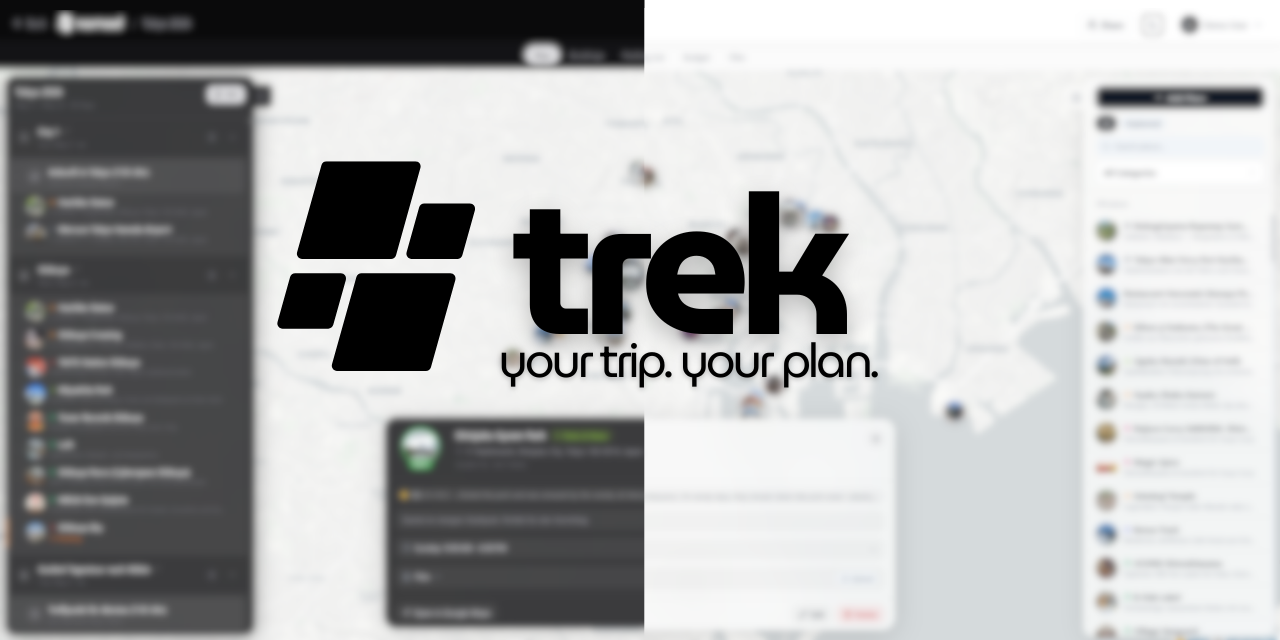
TREK is an open-source travel planner that combines trip planning, collaboration, bookings, budgets, packing lists, journals, offline PWA support, SSO. There is also MCP support. So your next group trip could take advantage of this nifty tool.

🛠️ Tool discovery: Arcane
If you think managing multiple docker containers is difficult, try Arcane. It is a modern, self-hosted Docker management platform. It gives you a GUI in web browser and you can use that to manage your containers, even on remote system. Get notified when a new container image is available and apply the updates. See logs, resource usage and a lot more.
Did I say you can self-host it? I guess I did ;)


📰 Linux news that matters
- A newly disclosed Linux kernel vulnerability called NoisyTCP allows unauthenticated attackers to remotely crash vulnerable systems running services such as Nginx, Apache, and SSH. Patch is already here.
- Nginx address five vulnerabilities that F5 says could enable code execution under certain conditions, along with several additional security flaws. The patch is available for this as well.
- AWS has released AWS Emulator, an open-source tool that emulates more than 200 AWS services locally, enabling developers and coding agents to test AWS integrations without using cloud resources. Their cloud, on your local system.
- DocumentDB 1.0 has reached general availability as an open-source, PostgreSQL-based document database that supports the MongoDB wire protocol and is released under the MIT license.
- Cloudflare has open-sourced Kitesurf, its browser engine for AI agents, under the Apache 2.0 license. Developers can run it locally or deploy their own instance on Cloudflare Workers.
- Microsoft has made Azure Linux 4 generally available, allowing customers to run the company's Linux distribution on Azure VMs, scale sets, and containers without an additional OS licensing fee.
😂 Geek humor

💌 Keep on loving Linux Handbook
The AWS video course is in post-production.
Become a Pro member · Browse courses · eBooks
Missed the previous editions? You can access the newsletter archives.
I like reading your messages, so just hit reply and tell me how you are enjoying Linux 😄